



In a major market development, the Nasdaq is planning to extend trading on its U.S. stock market to nearly 23 hours a day, five days a week, as it seeks to meet rising global demand for U.S. equities. This structural expansion will stretch active trading from 8:30 PM ET Sunday through 8:00 PM ET Friday, leaving only a 45-minute daily maintenance window. For retail and institutional market participants alike, round-the-clock equity access fundamentally alters volatility cycles, overnight risk management, and liquidity models.
Why Nasdaq Is Planning to Extend Trading to 23 Hours
Global demand for megacap tech and broader U.S. indices has surged across European and Asian trading sessions. International market participants previously relied on synthetic derivatives, contracts for difference (CFDs), or alternative trading systems (ATS) like Blue Ocean to gain overnight exposure.
By moving to an exchange-cleared model under SEC regulatory oversight, Nasdaq seeks to centralize overnight order flow. This move directly competes with 24/7 crypto markets and 24/5 forex sessions, providing direct access to cash equities like AAPL, NVDA, and TSLA across every global timezone.
Traders must recognize that while access expands, overnight sessions operate under different market microstructure rules. Liquidity is fragmented, and bid-ask spreads widen significantly between 8:00 PM ET and 4:00 AM ET.
How to Trade During Extended 23-Hour Market Sessions
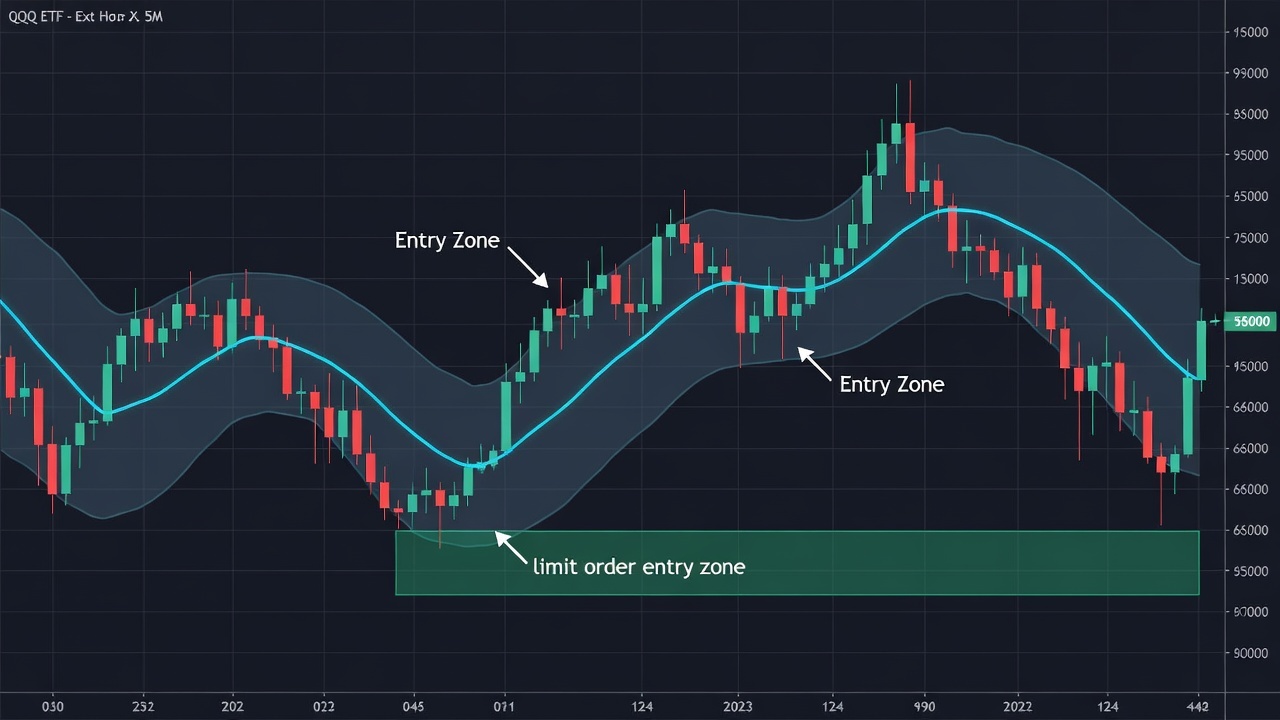
Executing orders during non-standard hours requires a systematic approach to protect capital against sudden slippage and thin order books. Follow this step-by-step framework to navigate extended overnight equity hours:
- Verify Broker Routing and Extended Permissions: Ensure your brokerage platform (such as thinkorswim, Interactive Brokers, or TradeStation) supports 23-hour continuous order routing with extended-hours session flags enabled.
- Exclusively Use Limit Orders: Never execute market orders during the overnight session. Place Limit Orders or Limit-On-Close orders set within 0.10% to 0.25% of the current consolidated national best bid and offer (NBBO).
- Adjust Volume Indicators for Low Liquidity: Switch your volume indicators to session-relative Volume Weighted Average Price (VWAP). Calculate standard deviation bands (±1, ±2 sigma) specifically anchored to the 8:30 PM ET session open rather than the prior regular market close.
- Set Tight Position Sizing Constraints: Reduce your standard position size by 50% to 70%. If your regular risk per trade is 1% of total equity, cap overnight trade risk at 0.30% to account for erratic gap potential.
- Confirm Breakouts on Multiple Timeframes: A breakout on a 5-minute chart during the Asian session (e.g., 2:00 AM ET) must be validated by a 20-period Exponential Moving Average (EMA) hold and an RSI reading above 55 before entering long.
- Establish Pre-Regular Session Exit Targets: Lock in profits or trail stops before the high-volume pre-market surge at 4:00 AM ET and the official opening bell at 9:30 AM ET, when institutional volume reprices extended-hours moves.
Free For Traders
Know What To Trade BEFORE The Opening Bell
The Big Dipper Dashboard hands you curated high-probability setups every single morning — free.

→ Get Free Big Dipper Access
Impact on Market Liquidity, Spreads, and Volatility
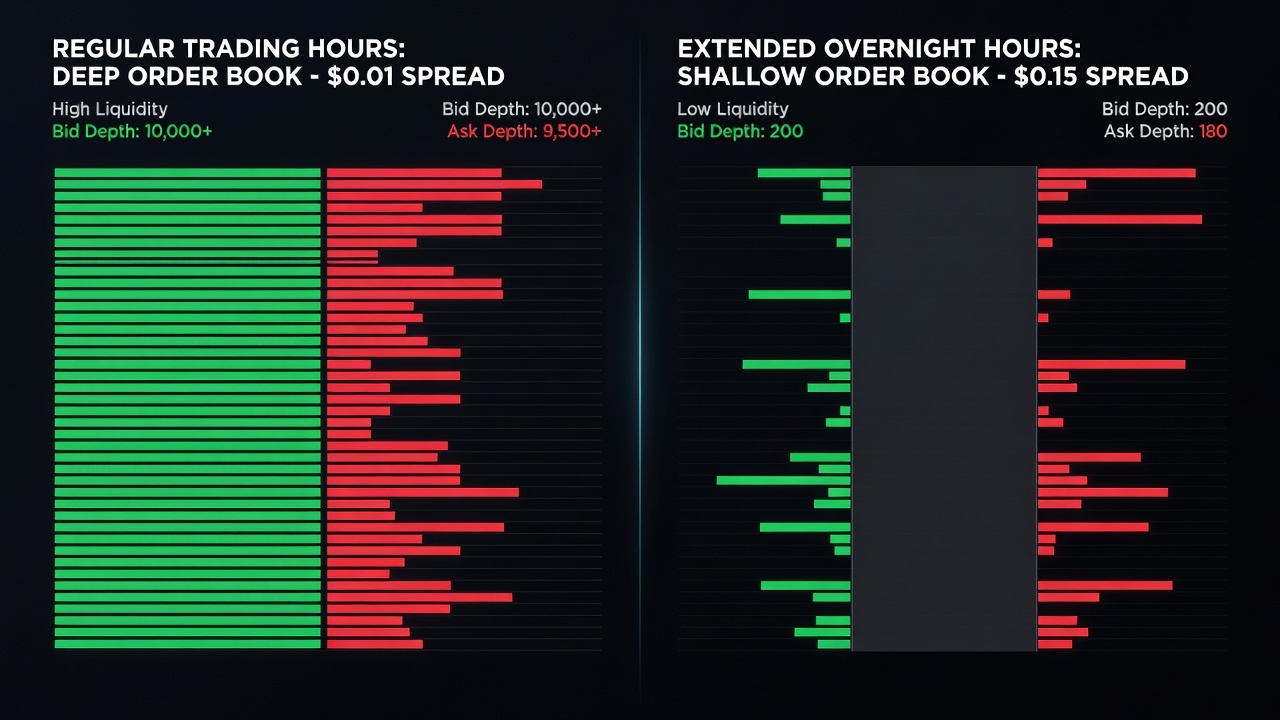
The transition as Nasdaq is planning to extend trading on its U.S. stock market to nearly 23 hours a day, five days a week, as it seeks to meet rising global demand for U.S. equities introduces critical mechanical shifts. Understanding these variables prevents costly execution errors.
Wider Bid-Ask Spreads and Liquidity Pockets
During regular trading hours (9:30 AM to 4:00 PM ET), liquid stocks like SPY or MSFT feature spreads of $0.01. During extended overnight windows, those spreads frequently expand to $0.08–$0.35 due to fewer designated market makers quoting active size.
Catalyst-Driven Overnight Gaps
Macroeconomic data releases from the Bank of Japan, European Central Bank, or unexpected geopolitical developments will instantly impact stock valuations. Without circuit breakers functioning identically to regular hours, price action can experience sharp, localized micro-gaps.
Common Extended-Hours Trading Mistakes to Avoid
Trading around the clock magnifies behavioral and execution pitfalls. Avoid these common errors when engaging with extended market sessions:
- Using Market Orders: Submitting market orders into an illiquid overnight order book often results in fills multiple percentage points away from the last traded price.
- Overleveraging Overnight Positions: Holding full-size margin positions through 23-hour continuous cycles exposes accounts to forced liquidations during sudden, low-volume flash drops.
- Assuming Day-Session Continuity: Overnight price trends frequently reverse once the 9:30 AM ET opening cross establishes true institutional volume.
- Neglecting Stop-Order Execution Rules: Standard stop-loss orders do not trigger on many retail brokerages during extended sessions; only active limit stops or direct platform alerts execute properly.
From Find Better Trades
Only Trade When Momentum Is HEAVILY In Your Favor
The Power Index oscillator measures trend conviction at a glance — it filters out weak, choppy action so you only take the strong moves.

→ See The Power Index
Frequently Asked Questions
Q: What are the exact hours for the proposed 23-hour Nasdaq session?
Nasdaq plans to operate continuous trading from 8:30 PM ET Sunday through 8:00 PM ET Friday, with a 45-minute technical reset break between 8:00 PM and 8:30 PM ET each weekday.
Q: Will retail traders have direct access to 23-hour stock trading?
Yes, retail traders will gain access through participating brokerages that integrate with Nasdaq’s extended-hours matching engine and update their routing infrastructure following regulatory approval.
Q: Are all stocks eligible for 23-hour trading?
Initially, extended trading focuses on high-liquidity assets, including Nasdaq-100 components, major S&P 500 equities, and widely traded exchange-traded funds (ETFs) such as QQQ and SPY.
Q: How does overnight trading affect standard stop-loss orders?
Most retail brokers do not support standard conditional stop-loss orders outside regular trading hours. Traders must utilize specialized session limit orders or maintain active risk monitoring.
📈 Want More? Join Our Free Trading Community